
Monsoon brings relief from the summer heat, but it also creates difficult driving conditions across Delhi NCR. Heavy rain, waterlogged roads, reduced visibility, potholes and sudden traffic congestion can make even a familiar route challenging.
Whether you are travelling to work, attending a family event, heading to the airport or planning an outstation trip, following basic monsoon driving precautions can help protect you, your passengers and your car.
1. Check Your Car Before Starting the Journey
Before driving in heavy rain, take a few minutes to inspect your vehicle. Check the tyres, brakes, headlights, indicators, wipers and windshield washer fluid.
Tyres with low tread may struggle to maintain grip on wet roads. Properly working wipers and lights are also essential for visibility during rainfall.
2. Reduce Your Speed
Wet roads reduce tyre grip and increase braking distance. Driving at a slower and controlled speed gives you more time to react to potholes, sudden braking and vehicles changing lanes.
Avoid rapid acceleration, sharp turns and sudden braking because these actions can cause the vehicle to skid.
3. Maintain Extra Distance
Keep more distance than usual from the vehicle ahead. During rain, your car may require additional time and road space to stop safely.
A larger safety gap also improves visibility and protects your car from water splashes caused by buses, trucks and other large vehicles.
4. Use Headlights Correctly
Turn on your low-beam headlights during heavy rain or cloudy weather. This makes your vehicle easier for other road users to see.
Avoid using high beams in heavy rain because reflected light can reduce visibility instead of improving it.
5. Avoid Deep Waterlogged Roads
Do not enter a waterlogged road when you cannot judge the water depth. Deep water can damage the engine, electrical system, brakes and other vehicle components.
Whenever possible, choose an alternative route. If other vehicles are struggling to cross, it is safer to turn back rather than risk damaging your car.
6. Do Not Drive Through Water at High Speed
If the water level appears manageable and crossing is unavoidable, drive slowly and steadily. Avoid sudden acceleration and do not stop in the middle of the flooded section.
After crossing, gently test the brakes at a safe location because wet brakes may respond differently for a short time.
7. Stay Alert for Potholes
Potholes are often hidden under rainwater. Hitting one at high speed can damage the tyre, wheel, suspension or underbody of your car.
Follow the path taken safely by vehicles ahead, but maintain enough distance so that you can react if they brake suddenly.
8. Keep the Windshield Clear
Rain and humidity can cause the windshield to fog from inside. Use the air conditioner, front defogger or ventilation system to keep the glass clear.
Do not wipe the windshield with your hand while driving because it can distract you and leave marks that further reduce visibility.
9. Avoid Distractions
Do not use your phone, adjust navigation repeatedly or perform other distracting activities while driving in rain. Monsoon roads require greater concentration because road conditions can change quickly.
Set your route before starting and ask a passenger to manage calls or navigation whenever possible.
10. Hire a Professional Driver When You Need One
Heavy rain, long-distance travel, late-night journeys and congested roads can be physically tiring. When you do not feel confident or comfortable driving, booking a professional driver for your own car can make the journey easier.
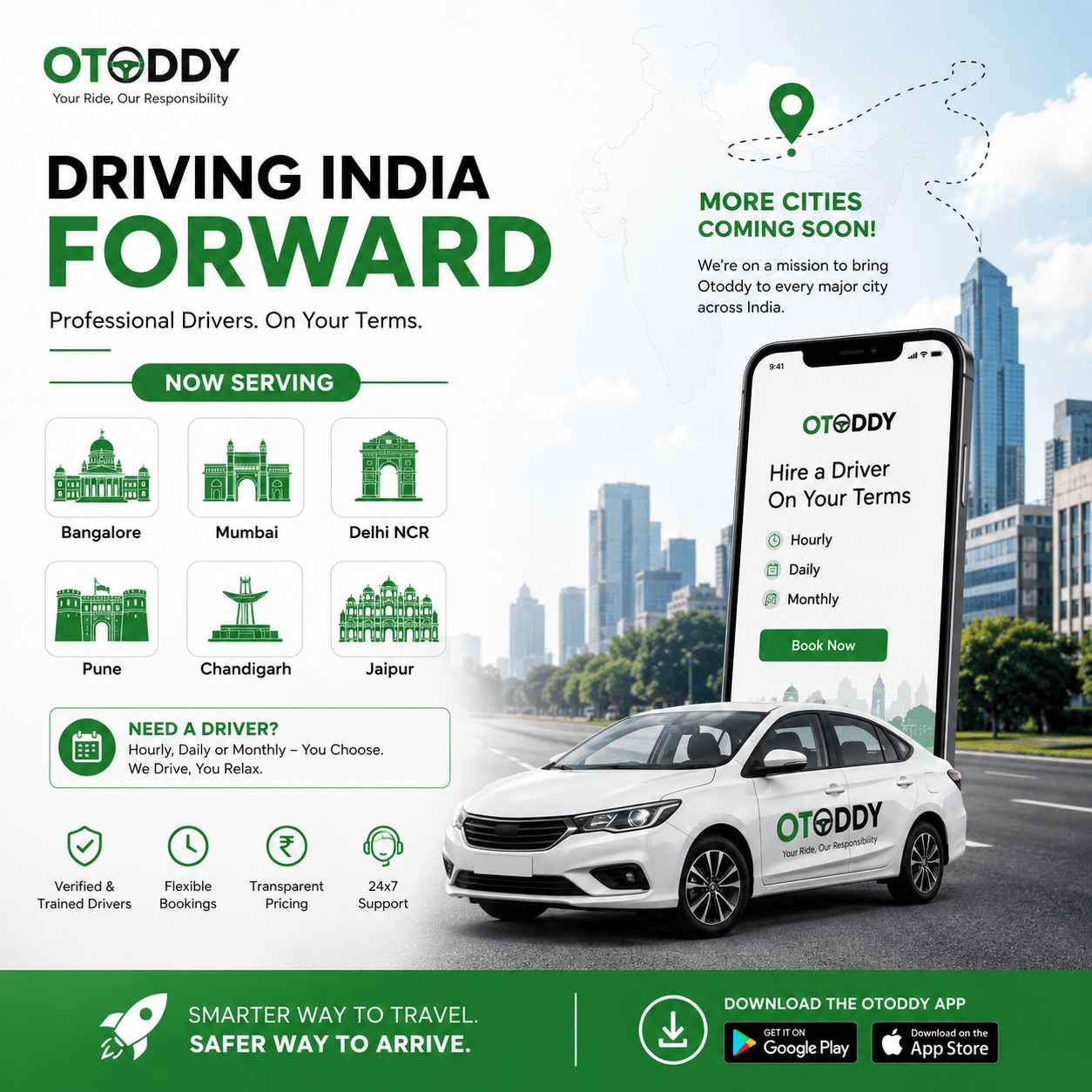
Otoddy helps car owners book verified drivers for hourly, one-way, monthly and outstation travel. You can travel in your own car while an experienced driver handles the road.
When Should You Consider Booking a Driver?
- When heavy rain is expected during your journey
- For airport pickups and drops
- For weddings, parties and family functions
- For late-night travel
- For long outstation journeys
- When an elderly family member needs to travel
- When you are tired or not comfortable driving
- For daily, weekly or monthly office travel
Why Book a Driver for Your Own Car?
Hiring a driver allows you to retain the comfort, privacy and convenience of your own vehicle. You do not have to shift luggage between vehicles, adjust to an unfamiliar car or drive when road conditions are stressful.
With Otoddy, customers can choose a preferred driver, view the hourly fare upfront and book according to their travel requirement.
Final Thoughts
Monsoon driving requires patience, preparation and better judgement. Slowing down, maintaining distance, avoiding deep water and keeping your vehicle properly maintained can significantly reduce travel risks.
When the weather or journey feels difficult, do not take unnecessary pressure. Book a verified Otoddy driver for your own car and travel with greater comfort and confidence.
Own a car, not the driving stress.
Article Tags